It’s hard to imagine activities more different that polo and fly fishing: in the one, you’re hustling, energetic, effortful, way out there in every sense of the word, in the other you’re at one with nature, in a quiet spot, focusing your energy on a lily pad or a ripple on the water, in a world of your own.
But there are deep similarities: both are all encompassing, and devotees of each find them to be metaphors for everything else they’re trying to do in life.
Here is a marvelous story written by a dear friend who got his first job, even his career, by focusing on his love of fly-fishing. Remember that members of the Nickawampus Polo Club are good at all sports, because the principles are the same for hitting good shots and dropping that little fly right where you want it on a quiet stream. And the rewards are the same.
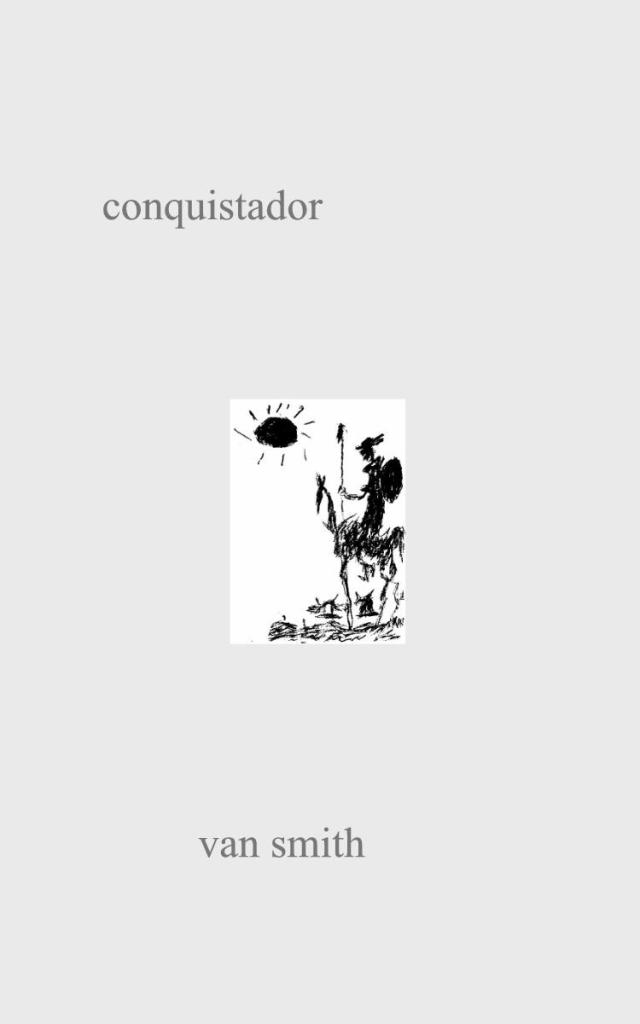
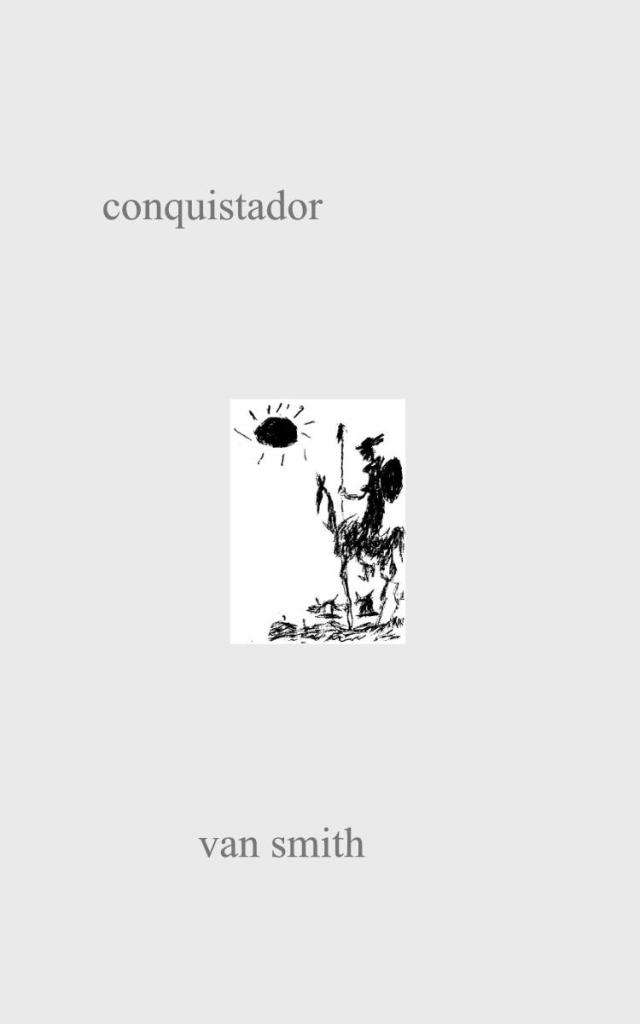
Rather than serialize Conquistador, like Charles Dickens, I’m going to post the Amazon order form so you can buy it. It costs $9.99 for paperback, $15.99 for hardcover, Kindle is $4.99.
Even though authors are supposed to refrain from reviewing their own work, I’m going to offer a few responses from readers so far, as a sort of review, so you’ll know what your getting for your hard-earned $15.99, $9.99, or $4.99.
First off, it’s only nominally about polo. It’s really about evaluating your own work product and not being overly optimistic or pessimistic about it. In other words, to be objective. Sal, the book’s hero, realizes that the years he’s put in, the goals he had, the living he’s earned, which formed the basis for his mis-evaluation, count less in his attempt to be objective than comparing how well he’s done with how well he hoped to do.
Furthermore, when he has to downgrade his assessment, he begins to wonder how he might have done better. This is the core of the book, which you will read nowhere else. While polo, or anything else that receives large amounts of attention, is hard enough to play well, there’s a much greater difficulty, in arranging circumstances so that you can do enough of it to start making progress. To do this, you’ll have to be resourceful, determined, and tough as hell. The world doesn’t intend for you to be good at polo, or anything else. If it did, you’d already be a ten-goaler. You’ll have to wrest your success away from its indifference, if not downright hostility. Sal “wins,” if you will, by coming up with a radically different practice regimen, one that really works, and his long-sought, elusive success comes in the certainty that he knows what he’s doing.
One last point: if you do get circumstances to align so that you can do a lot of it, play polo, sail, speak Spanish, or whatever it is, and you start improving, there will come a moment when you get it. It’s like going through a door, you’re inside now. Don’t overlook this moment. It’s what you’ve been working toward and hoping for. Enjoy it.
To all members of the Nickawampus Polo Club, here is a book I wrote twenty years ago about a dear friend who helped many, many players on the road to polo mastery. And we all had fun. Along the way, he learned as well as taught, both about polo and the fine, neglected art of learning itself. We are going to serialize the book, all 23 chapters plus prologue and epilogue, at the rate of two chapters a day, just like Charles Dickens. So, settle into your favorite chair, bring along a snack or beverage, and be transported across time and space into a real, often surprising adventure. Let’s begin.
As this picture of Prince Harry indicates, horses are a big part of polo. His horse obviously knows and likes him, and has really “joined up” to the task at hand. Read the story of Hidden Treasure to learn more about horses, the kind of bond you can form with them, and the kind of exalted fun you can have when they enable you to play your best, as Prince Harry is doing here.
Here’s an article from Polo Players’ Edition of June 2003. Read it carefully because, in my not-so-humble opinion, it’s the definitive sports article, i.e. the only one to derive the swing from first principles. When you’ve read and understood it, you’ll know what you’re doing and will have placed your game on a solid footing. Study it carefully, incorporate its idea into your swing, and prepare to play well enough that people say “he’s a member of the Nickawampus Polo Club. “
Anytime you’re trying to propel a ball through space, which includes virtually all sports, you’re doing it the same way. This explains why some people are good at so many sports, Wayne Gretsky, Mario LeMieux, Pete Bostwick, Charlie Menditeguy. They know the secret to good shot making, and use it no matter what game they’re playing. So let’s learn their secret and play all sports, tennis, golf, polo, or anything else, well.
The player on the far end is Welby Van Horn, who was finalist in the 1939 U.S. Open to Bobby Riggs. The player on this end is you, the viewer and member of the Nickawampus Polo Club. You have a stop in your swing just as Welby does, and you impart all that pace to your forehands and backhands just like he does, by angular momentum.
He brings the racket along the line of the shot, then pulls it at a greater and greater angle, to speed up the racket and thus the shot. And you do too. These good tennis shots will be the foundation of your good polo shots, which operate from the same principles, and are achieved the same way.
Yes, we members of the Nickawampus Polo Club play all sports well.
There’s a reason every sport has a few good players and everyone else struggles in frustrated mediocrity. And here it is.
The hands in this animation are those of the immortal Ben Hogan, drawn by Anthony Ravielli for Ben’s unrivaled book, Five Lessons. Notice how he pulls the club along in line with the intended shot. Then he starts to pull the club handle away from that line, at a greater and greater angle, until he’s pulling the handle at a 90o angle to the shot. This produces angular momentum.
His hands, describing an arc, move at a constant speed, while the clubhead speeds up, reaching its maximum speed just at the ball, and then very rapidly slows down. Also, and here’s the secret we promised, the swing has a stop in it…the hands coming to a dead stop just as the club meets the ball.
This secret distinguishes good players. So practice it, with a golf club, a tennis racket, or a polo mallet. The ball will start jumping with all that acceleration that you’re putting on it. And your game, and confidence, will build accordingly.
Welcome to the Nickawampus Polo Club. You’re a real member now.
Look carefully at the first photo. Those are a few of the most important horses in my life, from the porch bannister, to Trixie, our childhood pony, to Old John, whom tyros drew on the ranch, to lovely Raisin, my first polo love.
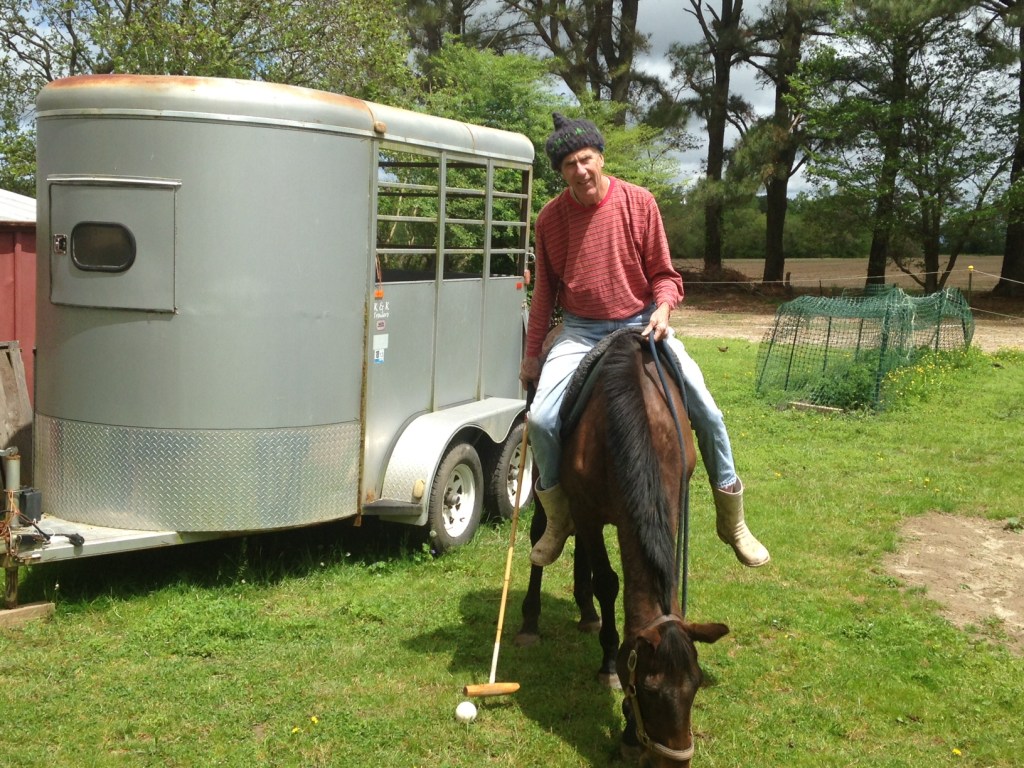
The third picture features me on “Don,” aka Prince Bohemond, a son of Cannonade, who won the 1974 Kentucky Derby, the first year after Secretariat. And notice that he’s grazing, not running, and I’m having a high old time, tapping the ball. The most difficult part of polo is getting enough practice, and you can accomplish that if you do it this way.
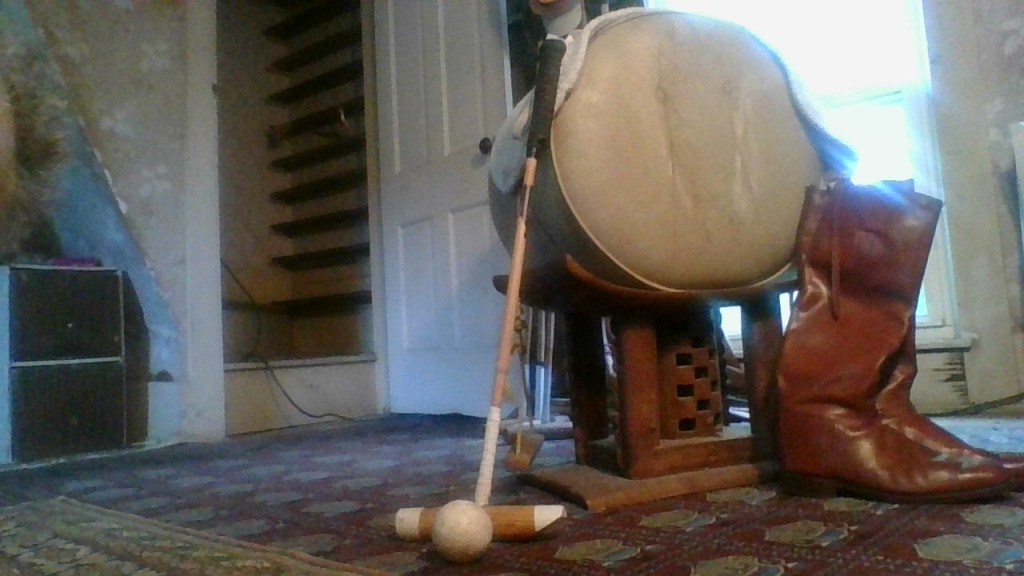
Now, look at the second photo, of a practice pony that I keep in my library. What about those cold, windy winter nights when you want to practice. Here’s how.
If you’re resourceful, and determined, you’ll be able to practice all you want and build real skill, so that when you’re on a cantering horse, on a field, you’ll be prepared, play well, and really enjoy it.

 NickawampusPoloClub